
Table of Contents
- Understanding Luxury Leather Before You Break It In
- How Long to Break in Leather Shoes: Timeline and Expectations
- Best Leather Conditioner for Softening and Comfort
- Preventing Blisters in New Leather Shoes: Practical Solutions
- How to Stretch Leather Shoes Safely Without Damage
- Step-by-Step Methods to Break in Luxury Leather
- Post-Break-In Maintenance for Long-Term Durability
- When to Stop Breaking In and Troubleshoot Problem Areas
- Frequently Asked Questions
Last Updated: September 20, 2026
Understanding Luxury Leather Before You Break It In
Luxury leather isn't like mass-produced footwear. Handcrafted Italian leather develops character as it ages, but the first weeks demand patience and the right approach. Understanding what you're working with changes everything.

Full-grain leather, the premium choice used in artisan pieces, has a natural grain pattern and develops a unique patina over time. This durability comes with a cost: new leather is stiff. It hasn't yet molded to your foot's unique shape. The tanning process and natural fibers create a material that needs time to become supple.
Suede and nubuck, softer leather variations, require different handling than full-grain leather. They're more delicate during break-in. Knowing your leather type before you start prevents damage that can't be undone.
The key insight most guides miss: break-in isn't about forcing leather to conform. It's about creating conditions where leather naturally softens and molds to your foot. This distinction matters because aggressive methods can permanently damage the hide.
How Long to Break in Leather Shoes: Timeline and Expectations
Breaking in luxury leather shoes typically takes two to four weeks of regular wear. This timeline assumes you're following proper break-in methods and not pushing through pain that signals damage.
Week one focuses on short indoor sessions. Your feet and the leather are both adjusting. Expect some stiffness and minor discomfort in the first few days.
By week two, the leather begins to soften noticeably. The toe box loosens slightly. Heel slippage decreases as the leather molds around your ankle.
Weeks three and four bring the leather closer to full comfort. Most people find their handcrafted shoes feel broken in by this point. The leather has developed flexibility while maintaining its structural integrity.
This timeline varies based on leather thickness and your foot shape. Thicker leather takes longer. Narrow feet experience faster break-in than wide feet because pressure distributes differently.
Best Leather Conditioner for Softening and Comfort
A quality leather conditioner accelerates softening while protecting the material. Not all conditioners work equally on luxury leather. Choose one designed for full-grain leather, not synthetic treatments.
Look for conditioners containing natural oils and waxes. These penetrate the leather without leaving a greasy residue. They restore moisture that the tanning process removes, making the leather more supple.
Apply conditioner sparingly. Many people over-condition, creating a slick surface that causes slipping. A thin layer is enough. Work it in with a soft cloth using circular motions.
Timing matters. Condition your shoes after the first week of wear, then again after week three. This supports the natural softening process without forcing it.
Avoid silicone-based products. They create a plastic-like coating that prevents leather from breathing and developing its natural patina. The goal is enhancement, not transformation.
Preventing Blisters in New Leather Shoes: Practical Solutions
Blisters happen when friction exceeds the skin's tolerance (pubmed.ncbi.nlm.nih.gov). New leather creates friction because the surface hasn't yet smoothed and the shoe hasn't molded to your foot. Prevention is far easier than treating blisters after they form.
Moleskin and blister pads are your first line of defense. Apply them to pressure points before wearing your shoes, not after blisters develop. Common friction zones include the heel counter, the sides of the toe box, and where the shoe's edge meets your foot.
Thick socks reduce friction directly. Cotton blends or wool socks create a cushioning layer between your skin and the leather. This simple change prevents most blister problems during early break-in.
Start with short wear periods. Wearing new leather shoes for two to three hours on day one, then increasing duration gradually, gives your feet time to adjust without damage. Your skin toughens as the leather softens.
Apply blister pads to high-risk areas even if you don't have blisters yet. Prevention beats treatment every time.
| Prevention Method | Best For | Duration | Cost |
|---|---|---|---|
| Thick socks | All break-in phases | Every wear | Low |
| Moleskin pads | Specific friction points | 3-7 days per application | Low |
| Blister prevention gel | Heel and toe areas | Single wear session | Medium |
| Short wear periods | Overall comfort | First 2 weeks | Free |
How to Stretch Leather Shoes Safely Without Damage
Stretching luxury leather requires caution. Aggressive stretching damages the material and voids the craftsmanship that makes these shoes valuable.
Gentle heat application softens leather safely. A hair dryer on low setting, held six inches from the shoe, gradually relaxes the material. Move the dryer continuously to avoid hot spots. Work for two to three minutes at a time.
Shoe trees are underrated tools for safe stretching. Insert them after wearing your shoes while the leather is still slightly warm and pliable. The wood gently expands the shoe's shape as it dries. Leave them in overnight.
For targeted stretching, stuff the shoe with damp newspaper or a damp cloth. The moisture combined with the shoe's natural shape stretching creates gradual expansion. Replace the newspaper daily for three to four days.
F'Lo Bendz Italian Leather Low-Top →
Never use a heat gun or apply direct flame. Extreme heat damages leather permanently, causing cracking and discoloration. The goal is gentle warmth that mimics the softening that happens through wear.
Avoid over-stretching. A half-size of stretch is reasonable. Attempting to stretch a shoe more than that risks structural failure.
Step-by-Step Methods to Break in Luxury Leather
Method 1: Indoor Wear and Thick Socks
This is the safest, most effective break-in method. It mirrors how leather naturally softens through use while minimizing injury risk.
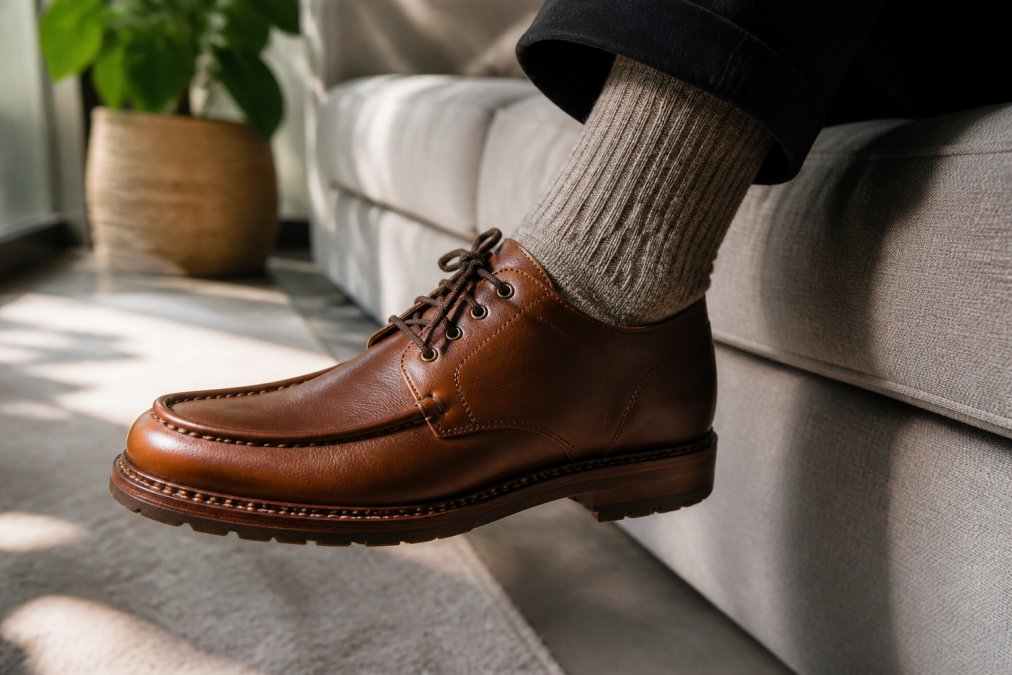
Step 1: Choose the Right Socks Wear thick socks, preferably wool or wool-blend. They cushion your foot and reduce friction against the new leather. Cotton socks work but provide less protection.
Step 2: Wear Indoors First Start with two-hour sessions at home. This removes the pressure of being in public while your feet adjust. Indoor walking on familiar terrain is low-stress.
Step 3: Gradually Increase Duration Day one: two hours. Day two: three hours. Day three: four hours. By the end of week one, you're wearing them for six to eight hours comfortably.
Step 4: Monitor for Pressure Points Pay attention to where the shoe creates pressure. If you feel rubbing that could blister, apply moleskin immediately. Don't wait for a blister to form.
Step 5: Transition to Outdoor Wear After five to seven days of indoor wear, move to short outdoor sessions. Start with a 30-minute walk. Gradually extend to longer outings.
Method 2: Heat Application to Soften Leather
Heat softens leather fibers, accelerating the break-in process. Done correctly, it's safe and effective.
Step 1: Prepare Your Shoes Put on the shoes you're breaking in. They should be on your feet, not sitting empty. The leather conforms better to your foot shape when you apply heat.
Step 2: Use a Hair Dryer on Low Set a hair dryer to low or medium heat. Hold it six to eight inches from the shoe. Never use high heat or direct flame.
Step 3: Apply Heat Gradually Start with the toe box, which typically needs the most softening. Move the dryer in circular motions. Spend two to three minutes on each problem area.
Step 4: Focus on Pressure Points If the heel is tight, apply heat there. If the sides of the toe box are rigid, soften those areas. Target the spots causing discomfort.
Step 5: Walk Immediately After While the leather is still warm and pliable, walk around your home. The warmth makes the material more flexible, and movement helps it mold to your foot.
Step 6: Repeat Every Two to Three Days Don't do this daily.
Method 3: Moleskin and Blister Prevention
Moleskin is adhesive-backed padding that protects skin from friction. It's cheap, effective, and should be your first defense against blisters.
Post-Break-In Maintenance for Long-Term Durability
Once your shoes are broken in, maintenance preserves their quality and extends their life. Handcrafted Italian leather rewards proper care.

When to Stop Breaking In and Troubleshoot Problem Areas
Breaking in shouldn't cause severe pain. If your shoes hurt intensely after two weeks of proper break-in, something is wrong.
Frequently Asked Questions
How long does it take to break in luxury leather shoes?
Most handcrafted Italian leather shoes require 2 to 4 weeks of regular wear to reach comfortable flexibility. Full-grain leather, commonly used in luxury pieces, typically needs longer than softer leather types. The timeline depends on leather thickness, your foot shape, and how frequently you wear them. Short duration wear periods during the first week accelerate the process without overwhelming your feet.
What's the fastest way to soften leather without damaging it?
Combine heat application with conditioning. Use a hair dryer on low heat, 6 inches from the shoe, for 30-second intervals on tight areas. Follow with a quality leather conditioner designed for genuine leather. This method softens the material while maintaining its integrity. Avoid high heat, which can crack or shrink the leather. Patience during the break-in period prevents the need for aggressive softening methods.
How can I prevent blisters when breaking in new luxury leather shoes?
Apply moleskin padding to friction points before wearing, particularly the heel and toe box areas. Wear thick socks during initial wear to reduce direct pressure. Start with short indoor wear sessions of 1 to 2 hours, gradually extending duration. Leather conditioner applied to the shoe's interior reduces friction. These preventative measures address pressure points early, avoiding the blister damage that can compromise leather quality.
Can I safely stretch luxury leather shoes myself?
Yes, gentle stretching methods work well on full-grain and suede leather. Use a shoe horn to ease your foot in without forcing the heel. Apply leather conditioner to tight areas before wearing. Heat application softens the material, making it more pliable for stretching. Avoid mechanical stretchers or aggressive methods that risk permanent damage to handcrafted details like metallic eyelets or embossed textures found on luxury pieces.